IPA Journal Club
Featuring Diana Diamond, PhD and Frank Yeomans, MD
Treating Pathological Narcissism with Transference-Focused Psychotherapy
The IPA Journal Club (JC) is a project of the IPA Communications Committee. It meets 6 times per academic year (September-June) on Fridays at 4 PM (16:00-17:15) London time [11:00 AM – 12:15 PM US Eastern Time] for 75 minutes. Each meeting, in webinar format, is in English and features a guest author who discusses with registrants an article or chapter they have published. The meetings are recorded and later posted online at the IPA website and on the IPA YouTube channel for viewing by the general public.
The JC’s next meeting, featuring Diana Diamond, PhD and Frank Yeomans, MD, will be on Friday, June 13, 2025, at 4PM London time, 11AM US Eastern Time.
Registration, which is free of charge, is open to IPA members and candidates, other interested mental health professionals, scholars and academics. A downloadable copy of the paper is available to registrants.
Ideally, all registrants will have read the paper beforehand and have an opportunity to ask questions or make comments to the guest author. You can also submit questions to the moderator to share with the author(s) after having registered and downloaded the paper. Send to [email protected].
Reading:
Diamond, D., Yeomans, F.E., Stern, B.L. & Kernberg, O. F. (2023). Treating Pathological Narcissism with Transference-Focused Psychotherapy. New York: Guilford. Chapter 7 Treating Pathological Narcissism: Early Phases of Treatment.
We are grateful to the Guilford Press for giving the IPA Journal Club permission to distribute a copy of the chapter to our registrants.
Summary
This chapter provides a clinical guide to psychodynamic psychotherapy with patients with narcissistic pathology, based on an empirically validated object relations approach to treating personality disorders, Transference Focused Psychotherapy (TFP). It illustrates how TFP with specific modifications can meet the special clinical challenges posed by patients with pathological narcissism at different levels of functioning and with different presentations.
Individuals with narcissistic disorders possess a heightened vulnerability in the sense of self, for which the typical narcissistic presentation (e.g., grandiosity, exploitativeness, entitlement) compensates. The grandiose self can be expressed overtly in self-aggrandizing behavior or covertly in grandiose beliefs and fantasies that the individual is too shame ridden to reveal. The difficulty in tolerating interpretive work requires a degree of objectivity and reflection that pose significant technical challenges.
From an object relations perspective, such difficulties in self (self-esteem and affect regulation) and interpersonal functioning (intimacy, dependency, empathy) are the surface manifestations of underlying psychological structures or maladaptive patterns of representing self and others form the substrate of narcissistic personality pathology.
Since TFP emphasizes identifying the totality of the individual’s internal dyadic experience (e.g. grandiose self, devalued other; vulnerable self, idealized other), it is effective in addressing the different phenotypic presentations, forms of expression, and/or fluctuating mental states that may characterize those with narcissistic pathology across the spectrum of personality functioning.
The focus of this chapter is on the early stages of TFP where the therapist identifies the contradictory aspects of the grandiose self, such as entitled and exploitative attitudes and behavior, that oscillate with intolerable feelings of vulnerability, inadequacy, and shame as they are evoked in the moment-to-moment interaction with and experience of the therapist. The therapist explores with the narcissistic patient the costs and consequences of grandiosity as a first step in translating nonspecific narcissistic grandiosity into specific internalized object relations.
The chapter also describes the analysis and dissolution of the grandiose self. A crucial step in this process is the interpretation of role reversals in the transference, or the process by which the patient may alternately enact one aspect of the object relational dyad (the dominant concept of self) while projecting the concept of the object onto the therapist, only to identify with the object and project the self-representation onto the therapist. As the components of the grandiose self are experienced, enacted and projected in relation to the therapist, and their origins in identifications with powerful, idealized internal objects explored, it begins to resolve allowing for the emergence of a more complex array of varied transferences (e.g. dependent, depressive, and/or erotic transferences) that provide access to deeper layers of the internal world and reflect the deepening and intensification of the relationships with the therapist.
The book chapter can be downloaded at this link.
Bio
 Diana Diamond, Ph.D. is clinical psychologist and psychoanalyst, researcher and professor. She is Emerita Professor in the Doctoral Program in Clinical Psychology at the City University of New York, and Senior Fellow at the Personality Disorders Institute, at Weill Cornell Medical College where she helped develop a psychodynamic approach to treating patients with borderline and narcissistic personality disorders (TFP). She is clinical professor at NYU Postdoctoral Program in Psychotherapy and Psychoanalysis and faculty at the New York Psychoanalytic Institute and society (NYPSI). She is the author or co-author of five books, most recently Treating Pathological Narcissism with Transference Focused Psychotherapy (Guilford Press, 2022). Her awards include the Aaron Stern distinguished visiting professor award from Weill Cornell Medical College for her contributions to understanding the etiology and treatment of narcissistic disorders. She is an honorary member of the American Psychoanalytic Association and heads its DPE research committee. She is in private practice in NYC and Sag Harbor, NY.
 Frank Yeomans, MD is Clinical Professor of Psychiatry at Weill Cornell Medical College, Director of Training at the Personality Disorders Institute of Weill-Cornell, and Adjunct Associate Clinical Professor of Psychiatry at Columbia University. He is president of the International Society for Transference-Focused Psychotherapy, an Honorary Member of the American Psychoanalytic Association and past Chair of the Group for the Advancement of Psychiatry Committee on Psychotherapy. He has authored and co-authored numerous articles and books, including A Primer on Transference-Focused Psychotherapy for the Borderline Patient, Psychotherapy for Borderline Personality: Focusing on Object Relations, and Transference-Focused Psychotherapy for Borderline Personality: A Clinical Guide, all co-authored with Drs. John Clarkin and Otto Kernberg.
The moderator of the Journal Club is Jack Drescher, MD
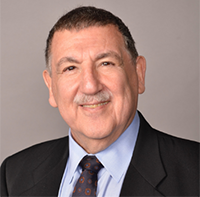 Jack Drescher, MD, a member of IPA’s Communications Committee, is a psychiatrist and psychoanalyst in New York City. A recipient of the 2022 Mary S. Sigourney Award for his international work on gender and sexuality, Dr. Drescher is on the faculties of the William Alanson White Institute, the New York University Postdoctoral Program in Psychotherapy and Psychoanalysis, the Columbia University Center for Psychoanalytic Training and Research and the Florida Psychoanalytic Center. He is a Clinical Professor of Psychiatry at Columbia and a member of the Board of Trustees of the WA White Institute. He is an elected Director-at-Large of the American Psychoanalytic Association. His publications have been translated into numerous languages. He is author of Psychoanalytic Therapy and the Gay Man (Routledge) and Emeritus Editor of the Journal of Gay and Lesbian Mental Health.
Previous IPA Journal Club meetings can be viewed on the IPA YouTube channel here.